
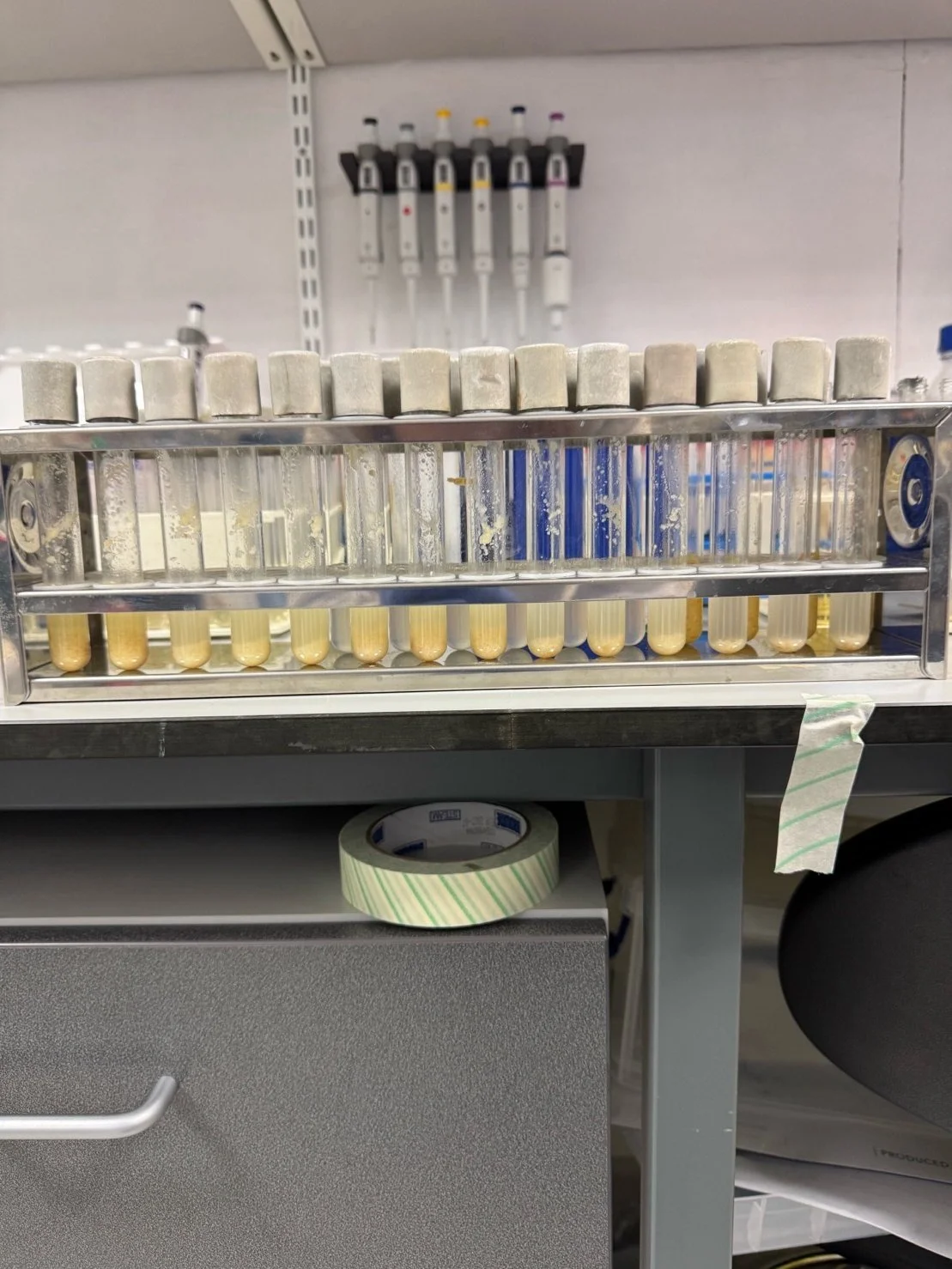
Growth assay assessing whether or not the cultures could grow on the waste.
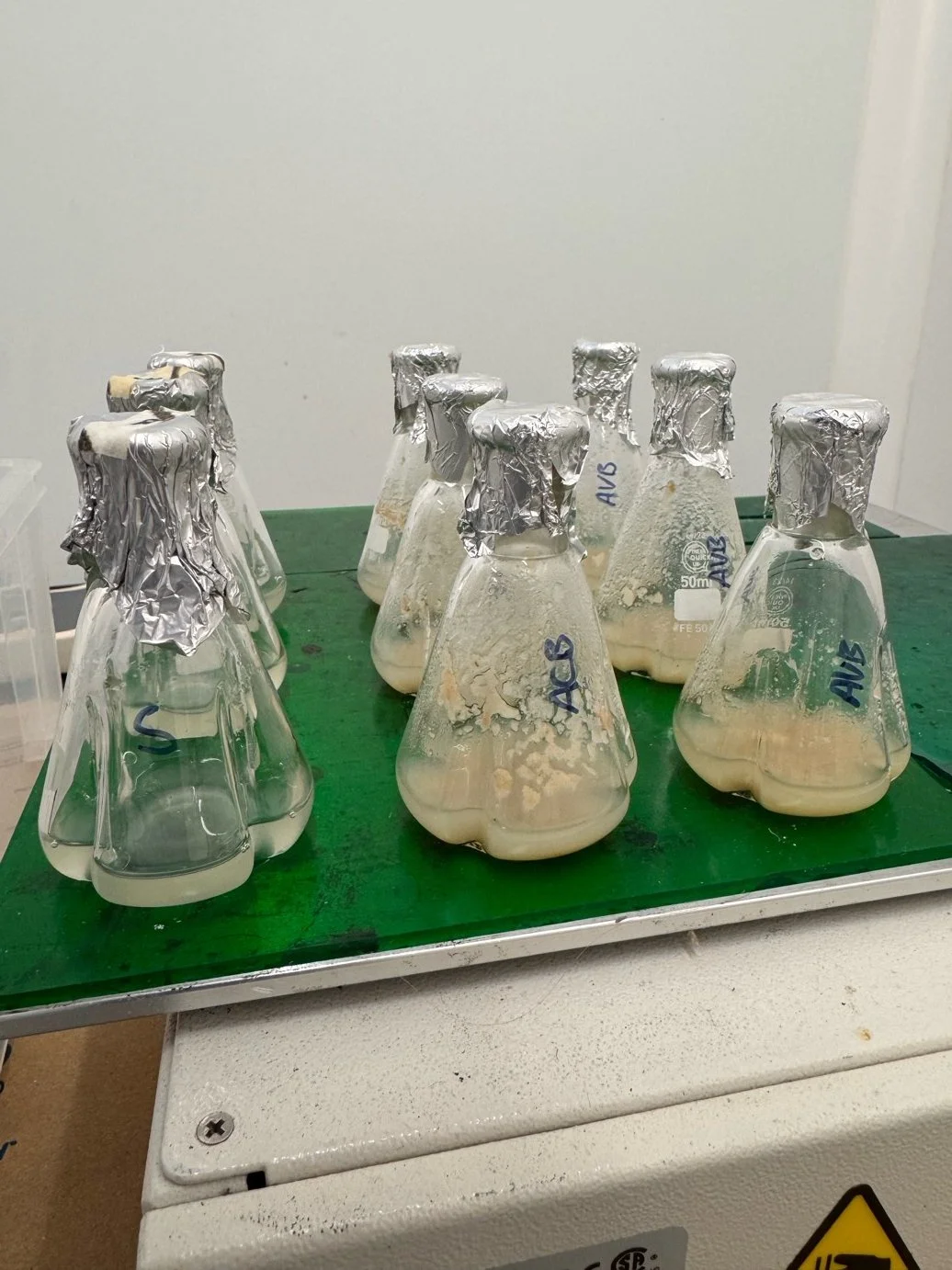
Bioproduction - flasks producing a heme protein
Introduction
Bread waste represents a major and growing source of domestic and industrial carbohydrate waste in the UK. An estimated 900,000 tonnes of bread and 750,000 potato waste is generated annually and is mostly either sent to landfill or incinerated, or used as animal feed either producing a low value product or significantly contributing to greenhouse gas emissions. These waste stream are rich in valuable carbohydrates which could be extracted to support a sustainable economy.
Challenge
C-Source Renewables and the University of Edinburgh wanted to explore streamlining the biorefinery/bioprocessing route to develop a simple, one-pot bioprocess for the depolymerisation and biological conversion of bread waste into high-value compounds for use in the materials and pharmaceutical industries. If cutting-edge engineering biology approaches could be successfully applied to enable the sustainable manufacture of essential platform chemicals and medicines, then the energy-intensive and fossil-derived chemical processes currently used could be replaced with biologically driven alternatives, reducing waste and offering a low-carbon manufacturing process. The process under investigation would convert industrial bread waste into monomer styrene in a single batch to streamline the overall process and reduce cost and environmental impact.
Solution
Feasibility funding from IBioIC enabled C-Source Renewables and Dr Mirren White of the University of Edinburgh to work together on this project. C-Source Renewables provided industrial waste samples of bread and potato, samples of its industrial glucose syrup and expertise on producing carbon-rich syrups, particularly glucose-rich syrups from starch-based industrial waste. These syrups are used in microbial fermentation to alleviate the cost of pure carbon sources, reduce the environmental impact of bioprocessing, and contribute to zero-waste strategies.
Dr White applied her knowledge and expertise in engineering biology to carry out research and analysis in the use of engineered microbes in the valorisation pathway from glucose, derived from depolymerised bread, to styrene, which is high-value and used industrially for plastics, resins, and insulation foams, and also investigating pre-treatment for scale-up.
Outcome
The project has demonstrated the valorisation of food waste as a renewable carbon source which supports waste reduction, low-carbon manufacturing, and the transition to a circular economy. As a result, there is potential for this to become the company’s main route to market. The research undertaken in this project is fundamental to advancing and accelerating biorefineries to commercial scale.
The project safeguarded one one job as a direct result of this project for the University of Edinburgh and had led C-Source Renewables to investigate its commercial potential The project confirmed that bread-derived glucose syrups are a suitable commercial option for microbial fermentations.
The University of Edinburgh will continue to be a partner to C-Source Renewables as this project continues within the University of Edinburgh-led sustainable manufacturing hub, C-Loop.
"C-Source Renewables Limited is excited about the outcomes of this project. It has demonstrated that a move to an on-pot process is feasible! We look forward to continuing our collaboration with the University of Edinburgh to help build the bioeconomy in the C-Loop Hub!" Rylan Cox, Director and Chief Operations Officer C-Source Renewables.

C-Source Renewables
The University of Edinburgh