
How Studying Bacterial Evolution Could Help Us Fight Antibiotic Resistance
The Challenge: Understanding How Bacteria Evolve
Antimicrobial resistance (AMR), the ability of bacteria to survive antibiotic treatment, is one of the most serious threats to global public health. Finding new ways to combat it depends not just on discovering new drugs, but on understanding how bacteria adapt and evolve over time.
Professor Paul Hoskisson's research group at the University of Strathclyde focuses on discovering novel treatment molecules, optimising the production of antibiotics, and understanding the evolution of antimicrobial molecules and the evolutionary mechanisms of AMR.
A key question driving one of their recent studies: when a single bacterial lineage is placed in a new environment and left to evolve over thousands of generations, how does it diversify, and what genetic changes drive that diversification?
Why Streptomyces?
Streptomyces is an industrially and ecologically important genus of soil-dwelling bacteria responsible for producing the majority of antibiotics used in medicine today.
Understanding how Streptomyces adapts to industrial fermentation conditions - the large-scale tanks used to grow bacteria for antibiotic production - has direct practical relevance. If strains naturally evolve to grow faster or use resources more efficiently, identifying the genetic mutations responsible could allow scientists to engineer better-performing strains from the outset.
The Experiment: 3,000 Generations of Evolution
The Hoskisson Lab designed a long-term evolution experiment (LTEE) to understand mutations that influence antibiotic production.
Over the course of more than 3,000 generations, multiple replicate populations of Streptomyces were grown under conditions mimicking industrial fermentation. The team then examined what had changed genetically, physically, and metabolically.
The results revealed faster growth rates and a shift towards specialisation in carbon source usage. Different lineages specialised in using different carbon sources for nutrition, a process known as adaptive radiation.
FlexBIO’s Role: Carbon Utilisation Profiling with the Omnilog
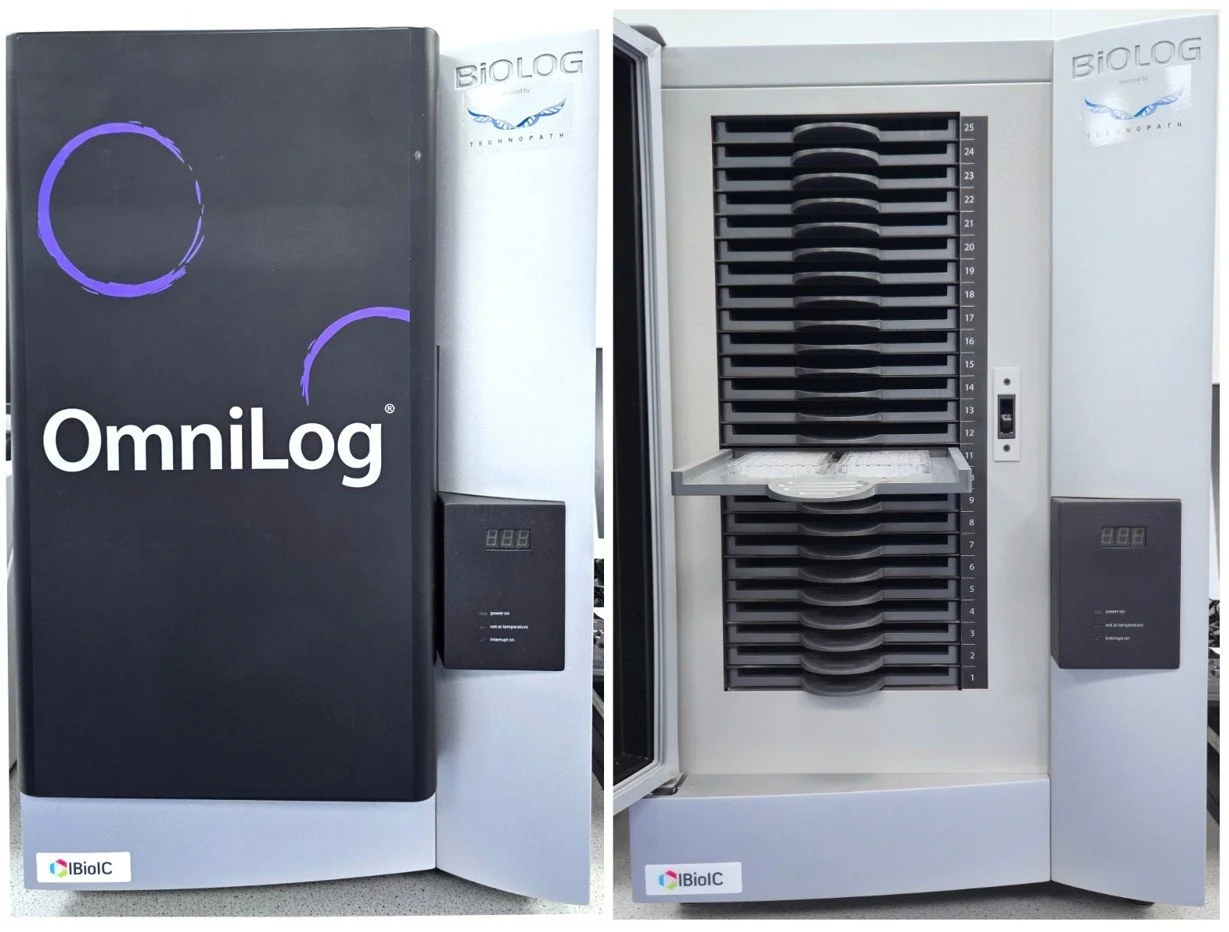
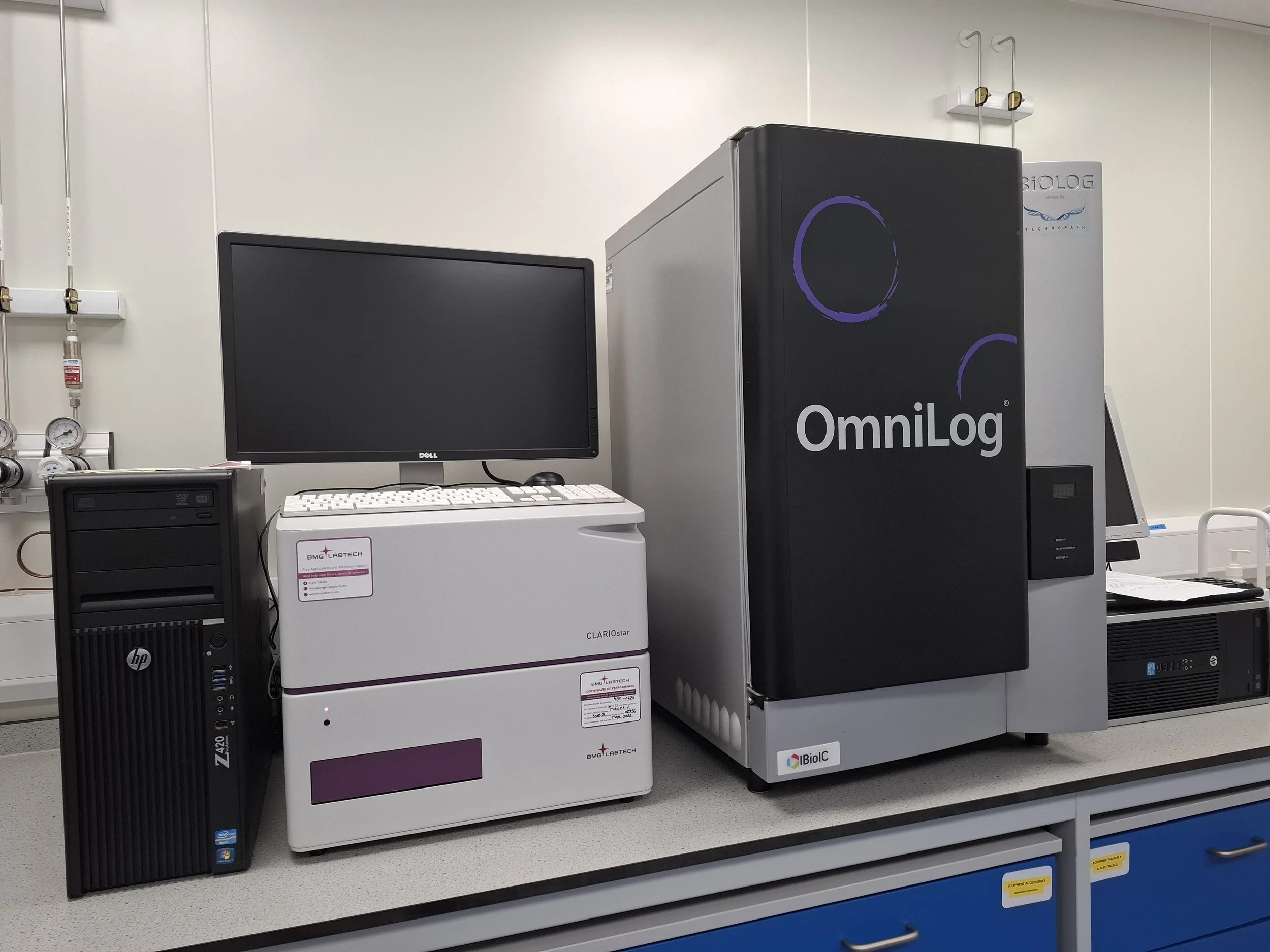
To understand how the metabolic capabilities of the evolved strains had changed, Dr. John Munnoch, a postdoctoral researcher in the Hoskisson Lab, used the Omnilog system at FlexBIO to carry out carbon utilisation profiling.
The Omnilog is a high-throughput instrument that simultaneously tests how well a bacterial strain can grow using hundreds of different carbon sources. By comparing evolved strains against the original ancestor, the team could build a detailed picture of which metabolic capabilities had been gained, lost, or shifted over the course of the experiment.
This data complemented the lab's genomic sequencing work, allowing them to connect genetic mutations to real, measurable changes in how the bacteria were functioning.
Key Findings:
Faster growth: Evolved strains grew more quickly under the fermentation conditions, a direct marker of improved fitness.
Metabolic specialisation: Different lineages specialised in different carbon sources. This metabolic diversification mirrors the kind of ecological niche partitioning seen across the natural world.
A single gene mutation driving the improvement: By integrating the metabolic data with genomic analysis, the team identified that mutations in a single gene were responsible for the observed fitness gains. This finding has significant practical implications.
The identification of a single-gene mutation linked to improved fitness in industrial conditions means it can now function as a genetic marker, a reliable signal that scientists can use to rapidly identify or engineer high-performing strains for antibiotic production pipelines.
Rather than waiting for strains to evolve desirable traits naturally over long periods, or screening large libraries of candidates, researchers can look directly for the presence or absence of this mutation. This could meaningfully accelerate the development of antibiotic production processes, which matters enormously in the context of a global AMR crisis that requires a continuous pipeline of new and improved treatments.
The study also provides broader insights into how complex bacteria diversify under selection, findings that are relevant to evolutionary biology, industrial biotechnology, and our fundamental understanding of how microbial populations adapt to new environments.
Key Details
Research group: Hoskisson Lab, University of Strathclyde
Lead researcher: Dr. John Munnoch
Principal investigator: Prof. Paul Hoskisson
Equipment used at FlexBIO: Biolog Omnilog (carbon utilisation profiling)
Published: Munnoch et al., 2025 — read the preprint on bioRxiv
Work with FlexBIO
FlexBIO supports academic and industrial research teams with access to specialist bioprocessing and analytical equipment - including the Omnilog system used in this study. Whether you need high-throughput metabolic profiling, fermentation development, or downstream processing support, our team works alongside yours to generate the data that moves your project forward.