
Eco start-up looks to give wind turbine blades a second life
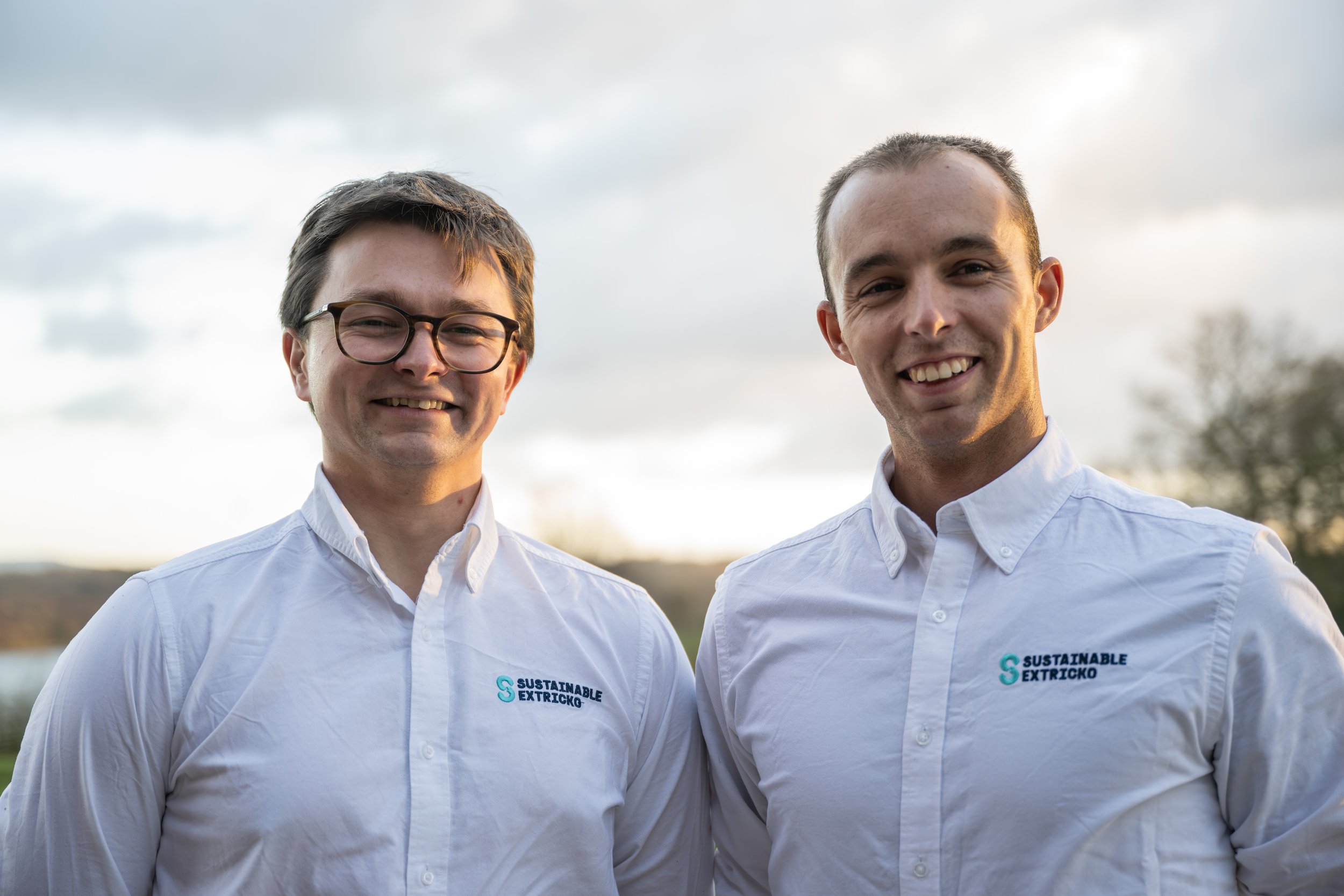
Sustainable Extricko founders Joe and Sam Penhaul Smith
A Derbyshire start-up developing technology to recycle hard-to-process composite materials is targeting the wind energy market as it moves towards commercialisation and prepares to build its first recycling unit.
Sustainable Extricko, originally founded by brothers Joe and Sam Penhaul Smith to tackle waste from the sailing industry, has created a process that uses steam and pressure to separate composites into their component parts, allowing useful compounds to be recovered rather than sent for disposal.
The company is working with its first major customer, a maritime technology company, to produce a recycling unit tailored to its manufacturing needs, while also exploring how the technology could help tackle the disposal of wind turbine blades, one of the renewable energy industry’s biggest end-of-life challenges.
Development of the technology has been supported by the Industrial Biotechnology Innovation Centre (IBioIC) through its role as the Cluster Management Organisation for the Scottish Bio-based Manufacturing Launchpad, led by Innovate UK. The programme supports businesses developing innovative, sustainable technologies and products, helping to drive growth across bio-based manufacturing and industrial biotechnology sectors.
Composites combine materials such as plastic with glass or carbon fibres to create strong, lightweight structures and are widely used in wind turbine blades, boats, cars and aircraft. However, their complex construction makes them challenging to recycle at the end of their useful life.
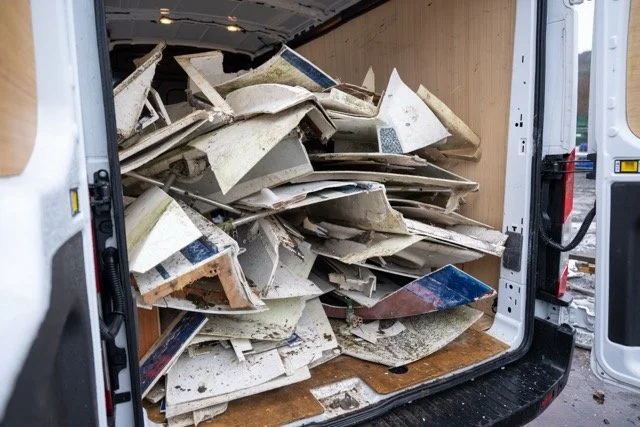
Composite materials being collected to be processed
The issue is becoming increasingly critical for the wind energy industry, where turbine blades remain difficult to process at scale. Most blades removed from service in the UK have historically been sent to landfill or incineration, while the volume of waste is expected to increase as older wind farms are repowered and more offshore turbines are decommissioned.
Across the UK and Europe, around 25,000 tonnes of wind turbine blade waste is expected to be generated each year, rising to between 45,000 and 52,000 tonnes by 2030[1]. Sustainable Extricko’s technology could provide an alternative to landfill by recovering materials from composite waste and creating further value from the compounds extracted during the process.
Dr Joe Penhaul Smith, co-founder and chief technology officer of Sustainable Extricko, said: “We started out looking at the problem in the sailing industry, but very quickly realised that the challenge extended far beyond boats and sails. Composite materials are used across some of the world’s biggest industries, but there is still a gap when it comes to dealing with them at the end of their life. We want to find a way of turning that waste into something that has value. Now that we are working with our first major customer, we are starting to understand what a commercial system could look like in practice.”
The company’s ambitions also extend beyond wind energy. Sustainable Extricko is working with the Sadler Lab at the University of Edinburgh to investigate how some of these recovered compounds could be converted into useful chemicals, including protocatechuic acid and vanillin.
With the technology moving towards commercial deployment, Sustainable Extricko is now seeking investment to build its first recycling unit based on the requirements of its initial customers, with construction expected to begin over the next 12 months. The company is also exploring the potential for containerised systems that could be installed close to where composite waste is generated, reducing the need to transport material to a central processing facility.
Kirsty Neilson, programme manager, UKRI Launchpad Cluster Management Organisation at IBioIC, added: “Sustainable Extricko demonstrates the kind of ambitious thinking we’re looking to support through the Launchpad programme. The team has taken a challenge they encountered in the marine sector and identified the potential to apply their technology across much wider industries, including wind energy and advanced manufacturing. We’re looking forward to continuing to support the team as they take the next steps towards bringing their technology to market.”
[1] https://www.scotsman.com/business/consumer/what-can-you-do-with-retired-wind-turbine-blades-to-keep-them-out-of-dumps-4138961