
Scottish agricultural co-operative unlock sustainable circular economy opportunity
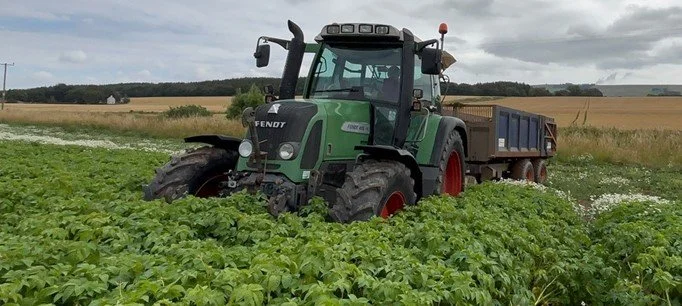
The Scottish seed potato industry, valued at £24.2m, produces approximately 51,200 tonnes of potato shaws annually as a by- product of seed potato cultivation. The removal of shaws is an essential crop management practice that stops further tuber growth and ensures quality, storability, and disease resistance; the above-ground foliage is typically cut and discarded in the field. However, they offer significant untapped potential, producing various high- value compounds, including solanesol used in the cosmeceutical, nutraceutical, and pharmaceutical industries.
Funded by Innovate UK through the Launchpad: Bio-based Manufacturing – Scotland programme, the project brings together industry expertise from farmer- owned co-operative Grampian Growers Ltd with world-renowned researchers from the James Hutton Institute and the University of Aberdeen. This innovative initiative aims to transform potato shaws into high value bio- derived ingredients for cosmeceutical, nutraceutical and pharmaceutical applications. Supported by, Alder BioInsights’ sector-leading strategic consultancy and the Scottish Agricultural Organisation Society’s (SAOS) cooperative expertise, the consortium is driving new commercial opportunities in sustainable biomanufacturing across Scotland and the UK.
Market Opportunity
Solanesol is a naturally occurring compound and a key precursor for coenzyme Q10 and vitamin K2, widely recognised for their antioxidant and anti-ageing properties. Currently, most solanesol is derived from tobacco leaves. The project seeks to create a more ethical and environmentally sustainable source of solanesol, reducing reliance on tobacco cultivation, lowering carbon emissions, and contributing to the circular economy.
Based on 12,800 hectares of Scottish seed potatoes grown in 2024, the industry could yield up to 120 tonnes of solanesol annually. This presents an opportunity for farmers to diversify income streams, and support a more resilient agricultural model.
Meeting Global Demand for Bio-Based Products
The project aligns with rising global demand for natural, bio-based products and growing use of solanesol which has increased from 4,000 tonnes in the early 2000s to 66,000 tonnes by 2022. By leveraging this potential, the project will make more complete use of the potato biomass, reduce agricultural waste, and create new economic opportunities for Scottish farmers and cooperative members.
Key objectives include developing a resilient, resource-efficient manufacturing process to:
Maximise resource value and minimise
Use carbon-neutral, eco-friendly extraction
Validate the purity, bioactivity and efficacy of potato-haulm derived solanesol
Provide a scalable solution for potato growers to diversify

Read more about the project we funded in our Case Study: Valorisation of co-products from the potato growing industry