
Carbon Negative Construction Materials
Challenge
Cement and concrete production accounts for around 8% of global CO2 emissions due to their energy-intensive production processes.
Ureaka is an ambitious spin-out project aiming to significantly reduce the carbon emissions of cement and concrete production while permanently storing CO2. During the IBioIC-supported project, the technical focus included biocementation – using biological or enzyme-driven carbonate precipitation to bind particles together – alongside circular mineralisation routes that could produce cement-replacement materials.
To be successful, Ureaka’s technology must integrate into existing cement and concrete supply chains. This has since led the company to prioritise a near-term supplementary cementitious material (SCM) / cement replacement route from mineral waste, while positioning biocementation for specialist applications such as crack repair and soil stabilisation.
Solution
Funding from IBioIC’s Spin Out fund enabled Ureaka founder Philip Salter to work with Vassilis Inglezakis of the University of Strathclyde’s Department of Chemical and Process Engineering to explore enzyme-induced carbonate precipitation (biocementation), process modelling, and circular processing approaches to mineralise captured CO2 into construction materials and cement-replacement products.
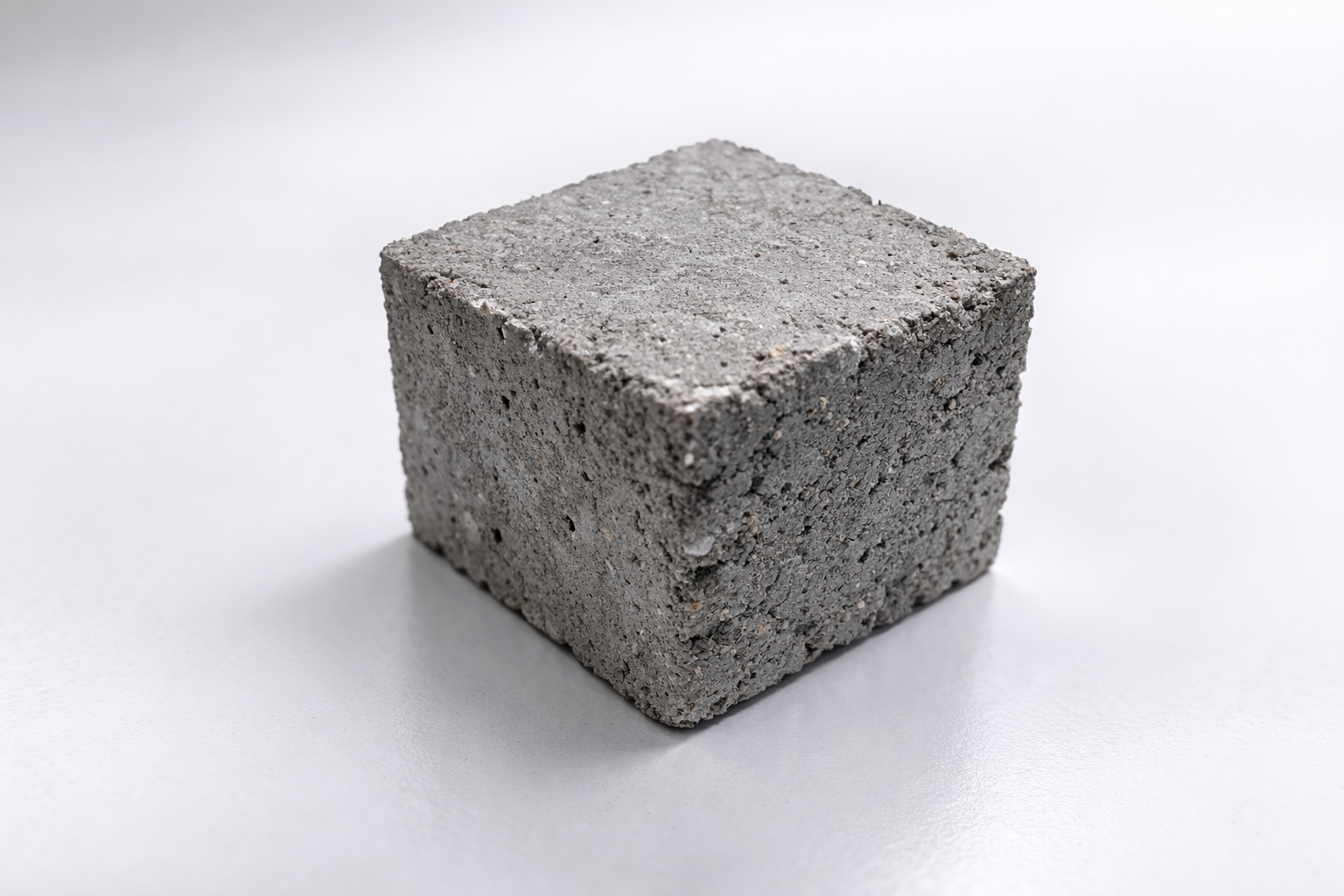
Ureaka designed an automated biocementation treatment system that significantly reduced the treatment time for laboratory samples and produced early prototypes such as brick slips and cladding tiles. This work provided the experimental and process basis for subsequent development of a circular SCM route, where captured CO2 and alkaline mineral feedstocks are converted into cement-replacement materials. Ureaka also engaged partners from the construction sector to align product development with real industry requirements and secured Letters of Intent for future collaboration.
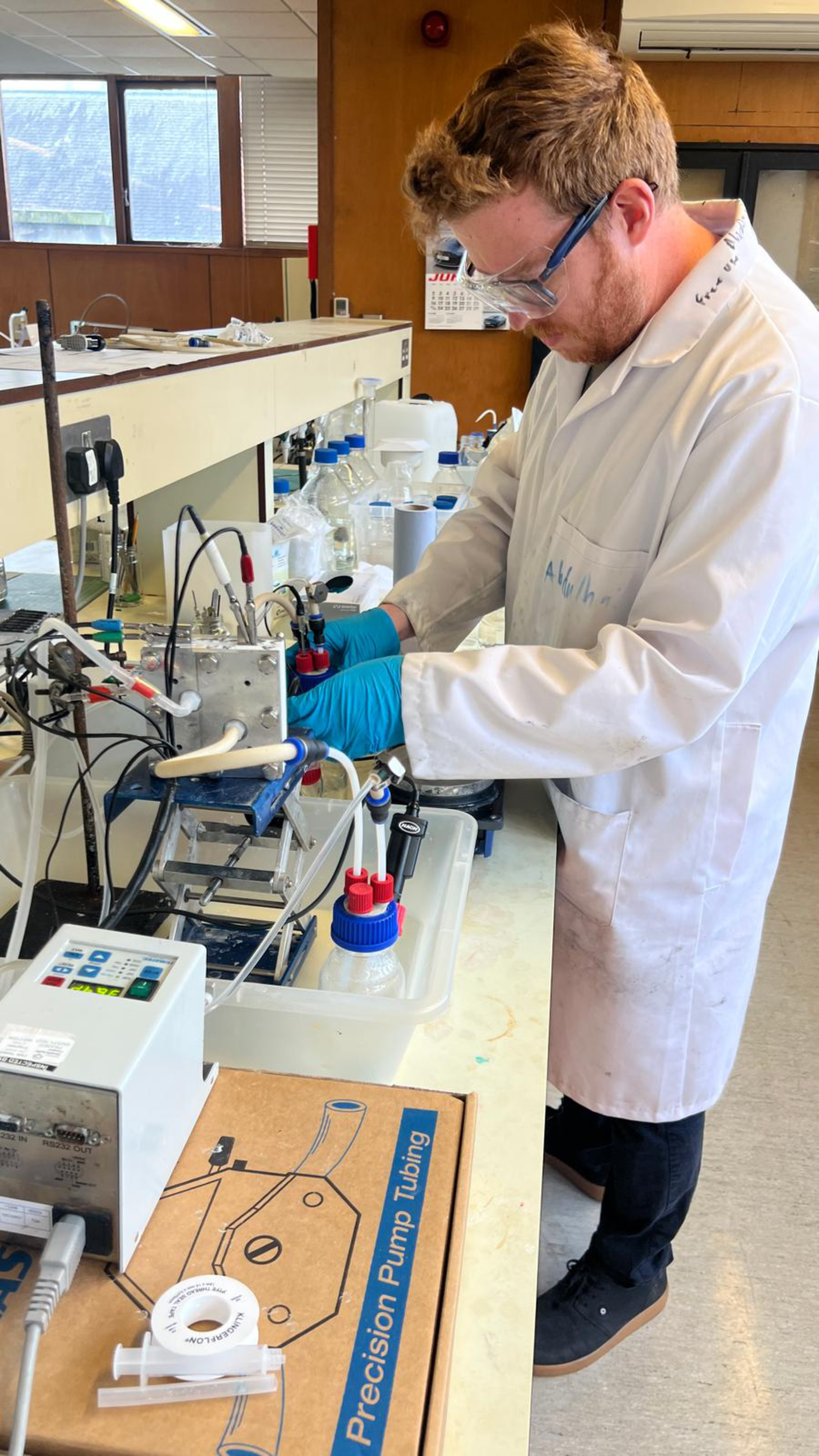
The University of Strathclyde provided expertise in biochemical engineering, mineralisation chemistry, and process modelling. Researchers supported laboratory experimentation, material testing, and development of a regulatory-aligned testing framework. The team also carried out Aspen Plus modelling to evaluate chemical pathways for CO2 capture, reagent regeneration, and mineralisation processes; this modelling remains relevant to Ureaka’s current circular SCM route.
The project successfully demonstrated prototype products, established repeatable lab-scale workflows, and helped define which aspects of the technology are best suited to near-term commercial deployment.
Outcome
This project has accelerated Ureaka’s path towards commercialisation. It enabled engagement with the construction sector using credible performance data, leading to Letters of Intent for future collaboration. The technical and modelling work clarified viable routes to market and supported a staged commercialisation strategy: a near-term focus on carbon-negative cement replacement / SCM products, with biocementation continuing as a platform for specialist applications such as crack repair and soil stabilisation.
The project also enabled the University of Strathclyde to apply advanced biochemical and process engineering expertise to a real-world industrial challenge, supported the development of new experimental protocols and modelling approaches relating to carbon mineralisation, reagent recycling, and biocementation, and strengthened industry collaboration, while generating research data that could support future funding applications and academic publications.
