
The Challenge this project sought to address
CelluComp produce a sugary by-product stream from their primary process for extraction of Curran® (microfibrillated cellulose) from low value waste/by-products from the processing of root vegetables such as sugar beet.
This project aimed to determine the feasibility of utilising this waste stream as feedstock for further processes to produce additional valuable bio-based products e.g. bio-polymers, biobased chemicals, providing additional revenue streams.
Solution - what IBioIC funding enabled the partners to achieve
Funding from IBioIC’s Feasibility Fund enabled CelluComp to work with partners from the University of Edinburgh and SRUC to explore the optimisation of microbe cultivation using side-streams from CelluComp’s core process as a growth media.
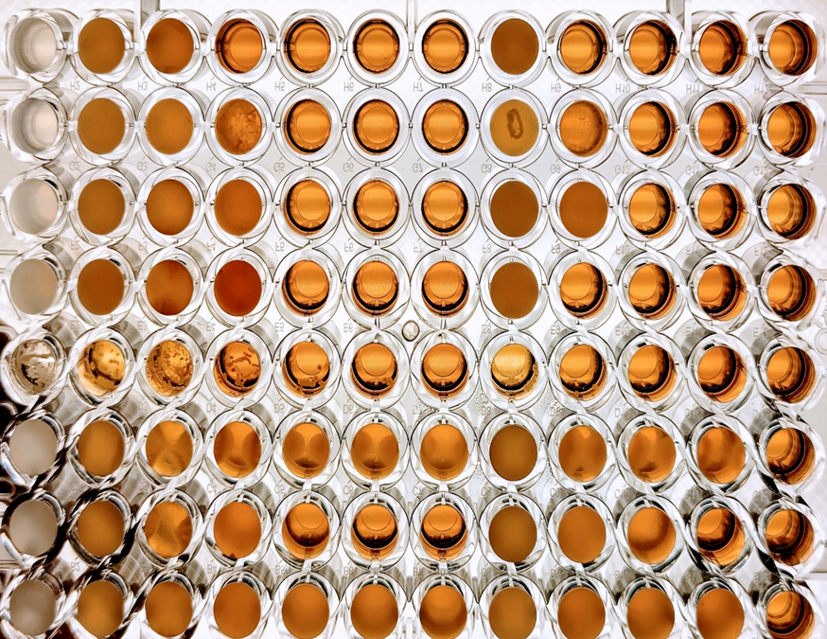
CelluComp provided the side-streams and technical expertise along with commercial input, enabling SRUC to conduct several growth experiments under various conditions using strains of aerobic and anaerobic fungi, and the bacterium Streptomyces griseus. The University of Edinburgh conducted growth experiments of bacterial and yeast strains under various conditions. The EdinOmics facility carried out metabolomics analysis of samples from experiments conducted by both SRUC and UoE.
CelluComp were able to establish which growth conditions and strains of microbe produced most valuable metabolites.
What the Outcome of this project means for the project partners
Close collaboration between the partners resulted in the development of an established workflow for testing the influence of feedstock on the growth of a variety of microorganisms, and the analysis of metabolites arising from these growth experiments.
Several protocols were developed that can be used to evaluate the use of aqueous side streams from other IB processes as growth media.
Techno-economic analysis indicates that there could be alternative commercial markets for these residues for CelluComp.