

Microbial production of hydroquinone from waste feedstocks
IBioIC funded a joint project between Victrex and Joanna Sadler and Stephen Wallace from the University of Edinburgh to explore alternative, more sustainable routes for the production of Hydroquinine, ideally from renewable or waste feedstocks, to contribute to their goal of carbon neutrality by 2030.

Enamel matrix protein formulation for tooth repair
IBioIC awarded over £8.5k through our Spin Out Fund to Bioenamel to produce human proteins in yeast and test them on surfaces that mimicked damaged teeth.
Engineering polyketide production
BioIC awarded funding to researchers at the University of Edinburgh to help Ingenza engineer a novel way to produce sustainable surfactants utilising polyketide-producing enzyme complexes that would be adaptable to industry’s needs.

Enhancing the purity of speciality seaweed products
Marine Biopolymers (MBL) is a Scottish SME whose focus is on extracting high value components from brown seaweeds for use in a range of applications such as food and pharmaceuticals, but also in different industrial application areas, where the use of natural polymers is growing fast.
Development of an assay for measuring levels and composition of Omega-3 in a variety of sources
Fatty acids are traditionally obtained by extracting oils from plant, fish, or animal tissues, however, the composition in these sources generally depends on the season and location. There is a requirement to find alternative sources to meet the growing demand across the food, pharmaceuticals and cosmetic industries.

New Strategies for Downstream Processing of Recombinant Proteins
A feasibility study which offers the potential to improve the production of therapeutic proteins through the development of a purification platform which includes an affinity chromatography step that has been specifically designed for use with a novel set of protein tags.

Overcoming barriers to sustainable production
Scottish biotechnology company ScotBio has developed an environmentally-friendly way of boosting the production and stability of the natural blue pigment phycocyanin, opening the door to access new global markets.

Accelerating scale up of the ABUNDA® bioprocess
As ENOUGH (formerly 3fBio) move mycoprotein production from their scale up facility in Glasgow to full scale production in the Netherlands, they wanted to design a suite of early diagnosis tests to determine when a batch of product is growing sub-optimally in the hope that issues can be mitigated and avoid reductions in the amount or quality of product.

Extending the analytical capability of affordable Microbioreactors
ŌGI Bio Ltd wanted to explore the feasibility of utilising the University of Edinburgh’s state of the art in-line dilution technology to extend the valid range of OD measurements for their microbioreactors.

Novel process for efficient bio-methanisation of waste- derived syngas
Owners of food waste AD plants are looking for alternative ways to valorise waste that contains both plastic and biobased substances. Carbogenics wanted to investigate whether fermentation from screening waste was possible and test a scaled-up version of their process for making biomethane from waste using bacteria.
Biological recovery of Rare Earth Elements
Using bacteria to clean waste water and recover metal ions.

Evaluation of Fish Waste as a Novel Feedstock for the Bio-production of Adipic Acid in Escherichia Coli
Turning low value fish waste into high value molecules using biotechnology.

Sustainable Substrate
Revive Eco develop green technologies to produce high value products from waste. Their initial focus is on waste coffee grounds from which they extract several high value chemicals and consumer products.
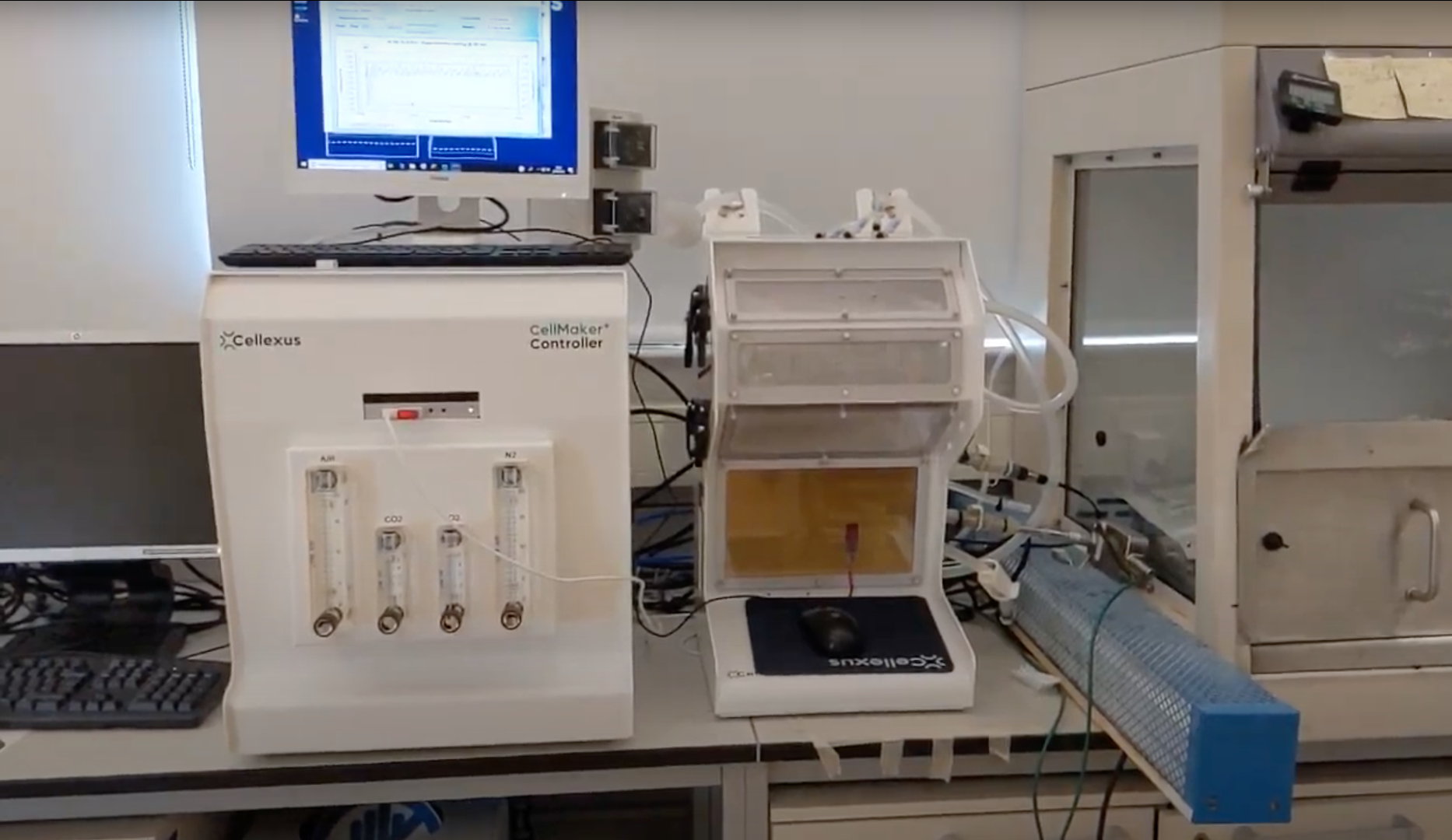
Using a Single Use Airlift Bioreactor to produce recombinant monoclonal antibodies (mABs) in mammalian cells.
This Feasibility project sought to obtain data on whether and how the CellMaker aids the growth of mammalian cells for use in the production of medicines, therapeutics and research reagents.

Antimicrobial nanocellulosic matrices and coatings
Waste root vegetables could help stop microbes growing on medical implants.

Using a mini-chromosome for synthetic biology in Pichia pastoris
Funding of just under £50k from IBioIC enabled Ingenza to gain invaluable expertise and enhanced their ability to access new markets and end users thanks to the technology developed as a result of this project.

Fish oil waste source for the production of bio based surfactants
This project investigated the feasibility of using oils extracted from fish industry waste to produce ingredients such as detergents and foaming agents for use in industrial products.

Analytical techniques for fungal morphology and nutrient feed composition in a food application
Improving the process for making sustainable meat alternatives at scale.

Commercial Chitosan Conversion
Trialling techniques to assess the chemical properties of chitosan extracted through a novel process.

Innovative spoilage test for microbrewers
IBioIC project funding enabled The Antibody Company to develop a novel test that has the potential to substantially reduce spoilage issues for microbrewers.